
Fabric Guide
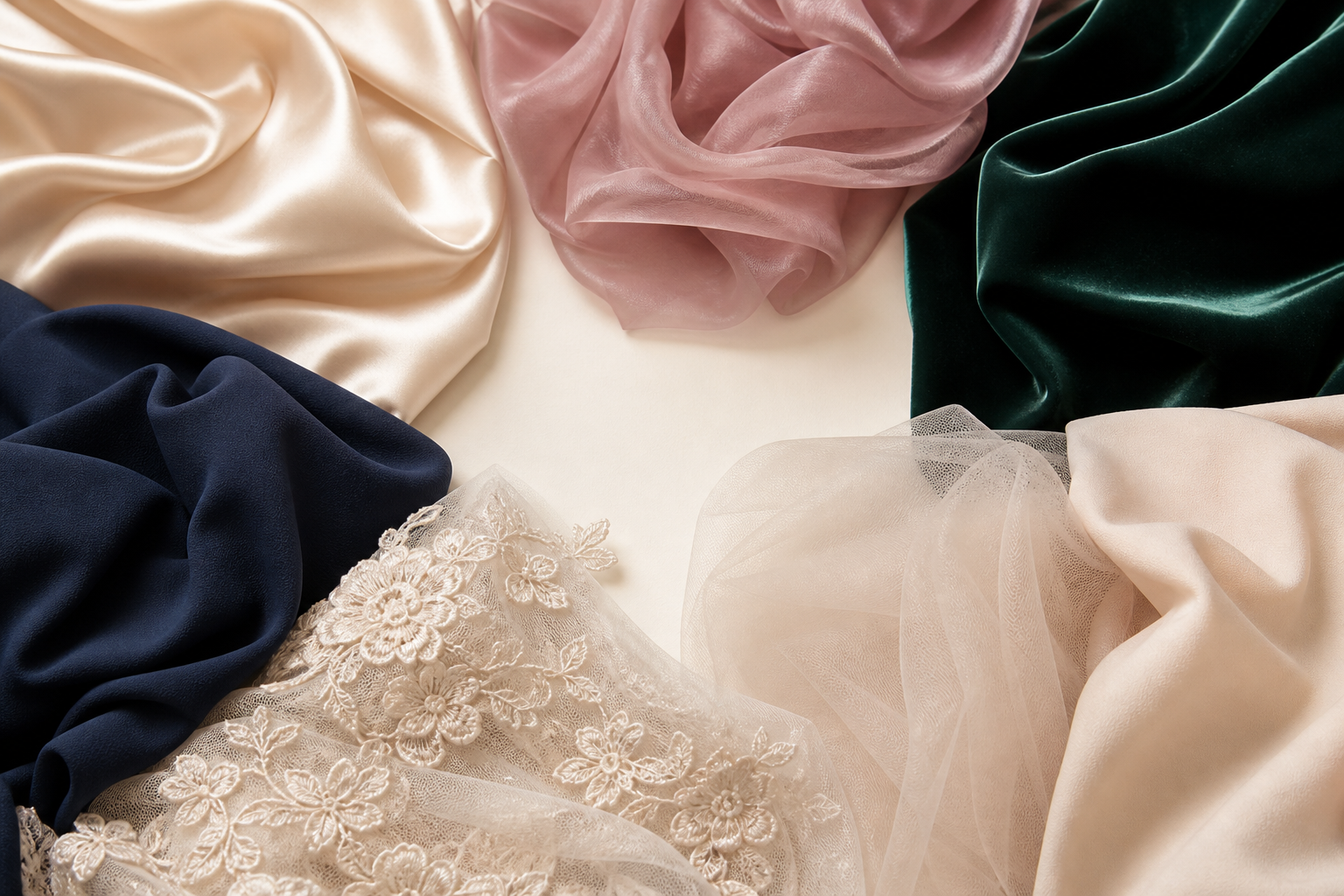
Fabric influences the way a formal dress catches the light, moves across the floor, holds its shape and feels throughout an event. This guide explains common special-occasion materials so you can read product details with more confidence.
Satin: Smooth and Luminous
Satin is defined by its smooth surface and distinctive glow. It can create a fluid slip-style silhouette or support a more structured bodice and full skirt, depending on its weight and construction. Because satin reflects light clearly, seams, draping and color depth become important parts of the design.
When reviewing a satin dress, look closely at the lining, stretch information and care instructions. Lighter satin may move softly, while heavier satin can create a more sculpted shape. Always use the product description for the specific garment rather than assuming every satin behaves the same way.
Chiffon: Light and Airy
Chiffon is a lightweight, semi-sheer fabric often used in layers over an opaque lining. It creates gentle movement and is popular for flowing skirts, flutter sleeves and bridesmaid silhouettes. Its soft, matte appearance can feel relaxed while remaining formal.
Because chiffon is delicate, avoid pulling it against rough jewelry or sharp accessories. Small surface variations may be more visible in strong light, and the garment should be handled according to its care label.
Velvet: Rich Depth and Texture
Velvet has a short, soft pile that changes in appearance as light moves across it. This gives jewel tones and deep neutrals exceptional depth. Velvet often feels especially suited to evening, fall and winter occasions, although the comfort of a particular gown depends on its weight, lining and cut.
Do not press velvet directly. Pressure and high heat can flatten the pile. Allow space around a velvet garment when storing it and follow professional care guidance when the label recommends it.
Tulle, Lace and Appliqué
Tulle is a fine net that adds volume without a heavy visual effect. It may be layered for a full skirt or used as a nearly transparent base for embroidery and lace appliqué. Lace brings pattern and texture, while appliqué adds dimensional motifs to the surface of a gown.
Inspect close-up product images to understand where decorative details sit, especially near the underarms, waist and seating areas. Keep jewelry, bags and other textured items from snagging delicate mesh or threadwork.
Crepe and Other Matte Fabrics
Crepe is known for a refined matte finish and smooth drape. It can create a clean, modern line that lets tailoring and silhouette lead. Other formalwear fabrics may include jersey, organza, mikado or blended materials, each with a different balance of stretch, structure, shine and movement.
How to Compare Fabrics Online
- Read the material, lining and stretch details for the exact product.
- Review full-length and close-up images in more than one lighting condition.
- Consider the event temperature, venue and amount of movement you expect.
- Check the garment care label before steaming, pressing or cleaning.
- Remember that screen settings can affect how color and shine appear.
If you need clarification about a product description, please contact Catacysm before ordering.